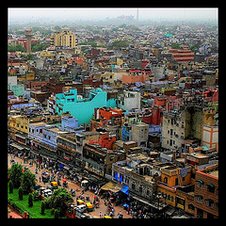
I can’t stop thinking about Mumbai.
Last summer, Roopa, a close friend who lives in Mumbai, and I had lunch at the Taj Mahal Hotel. We sat in the lovely hotel restaurant and ate an expensive lunch, enjoying ourselves and the serene environment. I remember it being so quiet, in stark contrast to the hustle and bustle of Mumbai’s unbelievably loud and crowded streets.
Having been there, I just can’t imagine what it was like during last week’s attacks. It feels like a scene from a movie, totally unreal.
Then I got an email from Roopa. She made it real.
It reminded me of September 11th in New York. That fateful Tuesday, I could not believe it was real. Even though I watched the towers fall from my rooftop, it still felt like slow-motion cinema. If I looked away, it would be okay.
Then I went to the disaster center to help. There, the reality of thousands of tragedies rained down on me. For two and a half years. But time passed, the skies cleared and I realized that New York would be okay. And she was.
As I walked the city streets this morning, I thought of Mumbai and New York and all the other cities that have recently experienced terrorist attacks. These unspeakable acts of violence are intended to destroy but these communities survive. They are resilient. People pick themselves up, put their cities back together and keep on living. Individually and collectively, they recover.
Here’s to Roopa, Cubas, Nishant and all the other Mumbaikers who survived – and who keep on living.
Monday, 1 December 2008


Wednesday, 26 November 2008
Hunger
When was the last time you were hungry? I mean, starving. So hungry that the searing stomach pains incapacitated you, preventing you from doing anything. So starving that those pains passed and you started to feel numb.
The last time I felt this hungry was in Zimbabwe. I volunteered with an environmental NGO for three weeks during the summer of 2006. We were working to protect the natural resources around Victoria Falls. Squished in tents, twenty of us slept next to hippos and cooked our meals together over an open fire. I was the only American. As it was a Zimbabwean organization, there was very limited funding for food. We were able to buy fruits, vegetables and a little meat every now and then but we mostly subsisted on mealie meal, which is like tasteless cream of wheat with a slightly drier consistency. Ugh. Unfortunately, I could never adjust to stuffing myself with the heavy starches to keep full. Combined with the long days of manual labor in the parks, the lack of food meant that I sometimes woke up in the middle of the night, doubled over in stomach pain. I was just so hungry. And once the hunger pains set in, it is all you can think about. They were very long nights.
It was an incredibly sad experience to be in Zimbabwe then – but that time could be considered the good old days now. Iinflation was only at two thousand percent and the grocery store shelves were scantily clad, but not totally bare. Now the country is an absolute mess. Forget about the actual inflation percentage. Just listen to the story of Katy, a starving 70 year old woman who is scavenging for corn kernels in a field. She has not eaten in three days. Meanwhile children pick through cow dung for seeds or dig around in the dirt for termites. Check out the whole story in an amazing piece from NPR yesterday (click here).
This story of hunger stopped me in my tracks yesterday. Though the villain is Robert Mugabe, the current president-dictator who taken his country on a hellish journey from independence to insolvency, I don’t want to get political. As I heard 10 year old Rebecca talk about eating termites for dinner, I just kept thinking about Thanksgiving and all the food I will eat tomorrow. And the next day. And the day after that. I realized how fortunate I am to never be hungry, unless I put myself in that position on one of my crazy overseas adventures.
So I made an impulse donation. You know, like impulse shopping where you buy something without fully thinking about it. I got online and checked out local non-profits that serve the hungy. I donated to two highly-rated DC area programs. My money won’t solve the problem. It won’t help Katy or Rebecca or anyone else in Zimbabwe. But it made me feel slightly better. And I hope that it means that at least one child in my community will have one less sleepless night because of hunger.
The last time I felt this hungry was in Zimbabwe. I volunteered with an environmental NGO for three weeks during the summer of 2006. We were working to protect the natural resources around Victoria Falls. Squished in tents, twenty of us slept next to hippos and cooked our meals together over an open fire. I was the only American. As it was a Zimbabwean organization, there was very limited funding for food. We were able to buy fruits, vegetables and a little meat every now and then but we mostly subsisted on mealie meal, which is like tasteless cream of wheat with a slightly drier consistency. Ugh. Unfortunately, I could never adjust to stuffing myself with the heavy starches to keep full. Combined with the long days of manual labor in the parks, the lack of food meant that I sometimes woke up in the middle of the night, doubled over in stomach pain. I was just so hungry. And once the hunger pains set in, it is all you can think about. They were very long nights.
It was an incredibly sad experience to be in Zimbabwe then – but that time could be considered the good old days now. Iinflation was only at two thousand percent and the grocery store shelves were scantily clad, but not totally bare. Now the country is an absolute mess. Forget about the actual inflation percentage. Just listen to the story of Katy, a starving 70 year old woman who is scavenging for corn kernels in a field. She has not eaten in three days. Meanwhile children pick through cow dung for seeds or dig around in the dirt for termites. Check out the whole story in an amazing piece from NPR yesterday (click here).
This story of hunger stopped me in my tracks yesterday. Though the villain is Robert Mugabe, the current president-dictator who taken his country on a hellish journey from independence to insolvency, I don’t want to get political. As I heard 10 year old Rebecca talk about eating termites for dinner, I just kept thinking about Thanksgiving and all the food I will eat tomorrow. And the next day. And the day after that. I realized how fortunate I am to never be hungry, unless I put myself in that position on one of my crazy overseas adventures.
So I made an impulse donation. You know, like impulse shopping where you buy something without fully thinking about it. I got online and checked out local non-profits that serve the hungy. I donated to two highly-rated DC area programs. My money won’t solve the problem. It won’t help Katy or Rebecca or anyone else in Zimbabwe. But it made me feel slightly better. And I hope that it means that at least one child in my community will have one less sleepless night because of hunger.
Thursday, 20 November 2008
Day Jobs
Have you ever raked leaves in a swirling wind storm? Me neither. It sounds miserable. This occupied my thoughts while walking to work yesterday. It was an unusually cold and windy day here in DC and I was intrigued by a woman who was working outside one of the embassies near Dupont Circle. She was valiantly sweeping the sidewalks but seemed to be losing the war with the evil gusts. Everytime she moved a leaf into a pile, another was lifted and dispersed.
I became frustrated watching her. It reminded me of the women in India who would sweep the streets. Bent over awkwardly, they steadily pushed around their half-sized, homemade brooms. Even after hours of this, the dirt never seemed to go anywhere and the streets no cleaner. I saw this practice all over India, even on dirt roads. To me, it represented utter futility.
Throughout the day, I found myself wondering what it was like to be one of these women. I struggled to imagine how I would deal with that type of job. It would make me crazy. I felt grateful for mine. Yet, as I left the non-descript office building where I had spent all day inside, dressed in business casual, sitting in a cube, typing away on a computer – I wondered if anyone was observing me and thinking that I was the crazy one. That my job would frustrate them and make them nuts. They would hate being cooped up inside and dealing with office issues, whether bureaucracy or a broken computer. Which begs the question - is it more exciting to battle the wind and dust or powerpoint and email?
I became frustrated watching her. It reminded me of the women in India who would sweep the streets. Bent over awkwardly, they steadily pushed around their half-sized, homemade brooms. Even after hours of this, the dirt never seemed to go anywhere and the streets no cleaner. I saw this practice all over India, even on dirt roads. To me, it represented utter futility.
Throughout the day, I found myself wondering what it was like to be one of these women. I struggled to imagine how I would deal with that type of job. It would make me crazy. I felt grateful for mine. Yet, as I left the non-descript office building where I had spent all day inside, dressed in business casual, sitting in a cube, typing away on a computer – I wondered if anyone was observing me and thinking that I was the crazy one. That my job would frustrate them and make them nuts. They would hate being cooped up inside and dealing with office issues, whether bureaucracy or a broken computer. Which begs the question - is it more exciting to battle the wind and dust or powerpoint and email?
Tuesday, 18 November 2008
Finders Keepers, Givers Weepers
I recently found a five dollar bill outside of my apartment. Instinctively, I picked it up. It was only after I got inside that I realized that I had no idea what to do with it. Should I try to locate the owner? No, it was a small denomination and I found it in a public place. It would be almost impossible to get it back to its original owner.
So what should I do with it? I placed the crumpled character on my table because it felt uncomfortable to put it in my wallet. Somehow that would mean that it was mine. And though I wanted it, I did not need it.
After a night’s rest, I decided to give the five dollar bill away. I imagined the possibilities. Maybe I would be generous with a tip for my coffee guy. Or I could leave it in a conspicuous location where someone else would pick it up. If they needed it, they would use it. If not, maybe they too would pass it on.
Stuffing the bill in an outside pocket of my bag (not in my wallet!), I headed to work. Sure enough, I encountered a homeless woman in a wheelchair asking for money outside my metro station. With an awkward aha! moment, I yanked the bill out and gave it to her. All I remember was her face. It was an unforgettable look of simple, grateful surprise.
Which made me even more uncomfortable. Was she surprised because people rarely offer her more than a dollar? Was she grateful because she could use the money to meet her basic needs? Of course, I imagined her using it to buy fruits and vegetables rather than booze or drugs. Or was this simply the look that she gives anyone that donates?
I don’t know. All I know is that this incident has me thinking about homelessness. I have a graduate education, I spent six years working in social services and I have traveled around the world. Yet I can’t figure out what the right thing to do is. You can argue that they are adults who make choices. But I can’t imagine sitting out there in the freezing cold, begging for your survival. I want to be empathetic. Still, I usually end up looking the other way, unless I have someone else’s five dollars to give.
Somehow this whole incident left me more conflicted than when I started. So please watch your money. I really don’t want to come across another orphaned bill. Finding a foster home for it is way too emotional.
So what should I do with it? I placed the crumpled character on my table because it felt uncomfortable to put it in my wallet. Somehow that would mean that it was mine. And though I wanted it, I did not need it.
After a night’s rest, I decided to give the five dollar bill away. I imagined the possibilities. Maybe I would be generous with a tip for my coffee guy. Or I could leave it in a conspicuous location where someone else would pick it up. If they needed it, they would use it. If not, maybe they too would pass it on.
Stuffing the bill in an outside pocket of my bag (not in my wallet!), I headed to work. Sure enough, I encountered a homeless woman in a wheelchair asking for money outside my metro station. With an awkward aha! moment, I yanked the bill out and gave it to her. All I remember was her face. It was an unforgettable look of simple, grateful surprise.
Which made me even more uncomfortable. Was she surprised because people rarely offer her more than a dollar? Was she grateful because she could use the money to meet her basic needs? Of course, I imagined her using it to buy fruits and vegetables rather than booze or drugs. Or was this simply the look that she gives anyone that donates?
I don’t know. All I know is that this incident has me thinking about homelessness. I have a graduate education, I spent six years working in social services and I have traveled around the world. Yet I can’t figure out what the right thing to do is. You can argue that they are adults who make choices. But I can’t imagine sitting out there in the freezing cold, begging for your survival. I want to be empathetic. Still, I usually end up looking the other way, unless I have someone else’s five dollars to give.
Somehow this whole incident left me more conflicted than when I started. So please watch your money. I really don’t want to come across another orphaned bill. Finding a foster home for it is way too emotional.
Saturday, 15 November 2008
Low Annual Fee
I recently signed up for a Southwest Airlines credit card. I fell for the sweet advertisement in the in-flight magazine. What can I say – I was a captive audience for three hours on a flight from Austin to Baltimore. To be fair, I also really enjoyed my flight and wanted to build up miles on Southwest so I would fly it more. The best part was the flight attendant, who got on the loud speaker and sang a little ditty when we arrived late. It was silly, irreverent and the most human response to a flight delay that I have experienced.
This all changed when I got the credit card a week ago and was totally stunned by a $60 annual fee.
I found the original in-flight advertisement and re-read it. Yes, it did indicate that there was a low annual fee. But they never mentioned exactly how much it was. How can you sell a product without telling someone the price? Instead, we are expected to guess at the definition of a low fee. Call me old-fashioned (or naïve) but I do not believe that $60 is a low fee.
Most of this is my fault. I should have been more skeptical. Still, I was depressed by Southwest’s response to my complaints. They blamed it all on Chase Bank (the card sponsor), explaining that they did not control Chase’s language in their advertisements. But my guess is that Southwest receives a pretty penny for that advertisement (which features the Southwest logo as prominently as the Chase one). They also probably get something out of the credit card deal with Chase.
I don’t know why this makes me so sad and angry. Coming off two years of business school, I should be familiar with this stuff. I blame the singing flight attendant. I was so touched by her actions that I started to care. I just can’t believe that she would be okay with this.
This all changed when I got the credit card a week ago and was totally stunned by a $60 annual fee.
I found the original in-flight advertisement and re-read it. Yes, it did indicate that there was a low annual fee. But they never mentioned exactly how much it was. How can you sell a product without telling someone the price? Instead, we are expected to guess at the definition of a low fee. Call me old-fashioned (or naïve) but I do not believe that $60 is a low fee.
Most of this is my fault. I should have been more skeptical. Still, I was depressed by Southwest’s response to my complaints. They blamed it all on Chase Bank (the card sponsor), explaining that they did not control Chase’s language in their advertisements. But my guess is that Southwest receives a pretty penny for that advertisement (which features the Southwest logo as prominently as the Chase one). They also probably get something out of the credit card deal with Chase.
I don’t know why this makes me so sad and angry. Coming off two years of business school, I should be familiar with this stuff. I blame the singing flight attendant. I was so touched by her actions that I started to care. I just can’t believe that she would be okay with this.
Friday, 14 November 2008
Local News
My parents have lived in the same house in the same town for more than 30 years. They have subscribed to our local newspaper during this entire time. You could say that they are loyal customers. But they are even more loyal Democrats. I think that they would only vote for a Republican if their children’s lives depended on it. Thus, they were beside themselves when their local paper, which has represented a progressive community for hundreds of years, endorsed John McCain.
I asked my mom whether they would cancel their subscription. She looked at me as though I had horns. Or worse, I had turned into a Republican. She said that they needed to know what was going on in their community. I tried to make an analogy: imagine the publisher of the newspaper pushing cigarettes on ten year olds but too no avail. They felt that strongly about staying connected to their community.
They also love the short paper format. The big city papers with their 30 plus page count are tough to get through in any reasonable amount of time in the morning. You have to get up at 5 am to get through everything. They truly appreciate the short, succinct and clear format.
In a world where we can access billions, if not trilllions of free stories, images and other multimedia on the internet in seconds, many people still find meaning in their local papers. And in simplicity. I am not a diehard supporter of the newspaper industry. I do think that it is a dying business. But humans need to be connected to those around them in a simple, essential way. They will find a way, even if it means sacrificing their political ideals.
Monday, 3 September 2007
A Summer of Lessons Learned
Wow, what a summer. I have learned so much. But blogs demand brevity so I will distill my summer experience into the 5 most important lessons that I have learned.

1) Business is NOT all bad.
Of course, I am being a bit facetious. But I did learn that business (big, medium and small) plays an important role in international economic development. Markets play a key role for the rich as well as the poor; in fact, the poor need effective, accountable businesses so they can get the goods and services they need at the least expensive prices. Markets also tend to be more transparent than the informal systems that are devised without them. Most importantly, markets enable people to make choices, even if they seem like limited options to outsiders. People can choose how they want to sustain themselves, where they want to live and what they want to purchase. A few years ago, no one would imagine that this fisherman would want a cell phone...but he did and now he has one.
At the same time, business cannot do it alone. While pure capitalists may disagree, I believe that we need a balance of government, business and non-profits for a healthy society. Government should not run businesses but it should regulate and protect public goods, ensure a safety net and provide systems for basic services. It should also make businesses play fair. And non-profits play a key third role, pushing government and businesses to be more effective and equitable as well as providing services for those who are ignored or forgotten by everyone else. If it were so easy (and profitable) to serve the rural poor in the developing world, businesses would be doing it a lot more!

2) Leaders should listen more, talk less.
I realized time and time again this summer that I know nothing. Well, not exactly nothing but I have a lot to learn. Though I was frustrated at times, I was reminded how much you can learn by listening. By asking questions rather than relying on assumptions, you get a better understanding of an issue or dilemma. You are then better prepared to work with others to collaborately devise an innovative solution rather than get caught up on ineffective approaches.
My village visits made me realize that you have to be a great listener in order to be a great leader. I learned as much from the pioneering Drishtee women entrepreneurs as I have from any business school case study. Working in the field reminded me that organizations rely on the strengths of all their members so leaders need to get the best out of everyone around them. To do that, you have to get people to trust you. Especially when you are in an unfamiliar environment, whether it is a slum, rural village or a new office! And I found the best way to get people to trust me was to listen.

3) Think Globally, Act Globally.
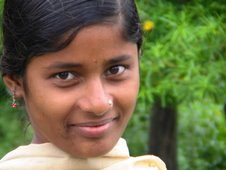
We live in a global society. No community or country can act as a island (even if the country is an island!). Between trade, immigration and diplomatic relations, we are all connected. Even though we are sometimes divided by ethnic, cultural, social and/or political differences, I do believe that we can create a better world for the next generation by working together rather than against each other. Whether you are Italian or Indian (like the woman and children in this photo), you can find common ground.
In my experience in India, I have been impressed by the power of international free trade to encourage widespread economic growth and development. I have seen the positive upside of outsourcing and globalization. While I recognize that fair play is necessary to ensure the success of trade, I have seen firsthand the beneficial impact it can have on the poor.

4) Equal Rights are Empowering.
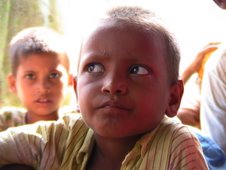
Women can play a critical role in economic development. However, we have to ensure that they are part of the process. This requires significant investment and energy in the short-run because women are not as experienced or educated as their male counterparts, especially in less advantaged populations. Organizations have to take a risk on these women to help them succeed in business. Drishtee has done a fantastic job involving women as entrepreneurs and I believe it will pay off for the organization in the long run. To increase female participation in the formal market economy, however, we also have to address the existing gender-related barriers. Laws are needed to protect equal rights and criminalize discrimination and domestic violence. Like this girl and boy, all children must have equitable education opportunities and child care issues must be considered.

5) You Gotta Have Hope.
I read an article this summer about a global survey that asked people what they thought about the future. I can’t remember the exact numbers but people in
Friday, 24 August 2007
Thanks
As I wrap up my time in India India 


Tuesday, 21 August 2007
Unintended Consequences of a Call Center
Thanks to the terrible traffic in Mumbai, I spent a lot of time with Iqbal, the driver for my friend. Originally from Pune, Iqbal is a Muslim who was born and raised in
Iqbal told me all about the Muslim community in Mumbai. He was incredibly open and we discussed veils and women’s rights as well as fundamentalism and terrorism. Proud of his religion but concerned about the extremists, Ikbal represented the modern Muslim Indian.
Still, I was most amazed with the story of Iqbal’s son, who works in a call center nearby. Though Iqbal has struggled financially throughout his life, he is comforted by the fact that his son has many more opportunities. His son speaks English fluently and has secured a high-paying position. Ikbal says that this job has changed his son’s life; he is committed to working hard to achieve success and is hopeful for the future. In addition, he has a Christian girlfriend whom he met at work. When I asked Iqbal if he was okay with his son’s girlfriend, he said that things had been different for his generation but his son helped him realize that they were happy. Which made Iqbal happy.
Of course, Iqbal and I both know that the call center job itself does not create this happiness in and of itself. Still, these jobs can have a positive impact on employees. They are paid well relative to the national average, receive excellent training and are likely to move up within their organizations if they work hard. They are also exposed to the broader world and are more invested in the future. In addition, young folks like Iqbal’s son are less likely to be influenced by extremism than disenfranchised Muslim youth who live in crowded, under-resourced slum communities where the offer of fundamentalism seems more enticing.
I am not naïve enough to believe that call centers can save the world. Still, Iqbal’s son provides a compelling portrait of the upside of globalization. Please remember him the next time you get frustrated with customer service. Don’t be mean to the representative, just insist on speaking to a supervisor!
Saturday, 18 August 2007
Maximum City
I visited a friend in Mumbai, the largest city in India Bombay Delhi which reminds me of Washington , D.C. , Mumbai feels like a mix of New York City , Los Angeles and Miami
Through a connection from a Stanford classmate, I visited a school for disabled children and community programs in the slums. Once again, I realized how doubly difficult it is to be poor and disabled, physically or emotionally. Still, I was impressed by the competence and compassion of the school’s staff who insist that these children are treated with dignity and, ultimately, empowered to live a normal life.

I also met with a group of mothers from the slums. These women are part of a self-sustaining help group. With sewing machines, they produce goods such as tablecloths and handcrafts. As they work, they discuss the challenges they face as well as support each other.
I introduced myself to the group and explained my background. When I mentioned my work combating domestic violence, one woman raised her hand. She was a composed woman in her early twenties who was 7 months pregnant. She explained that her husband had died six months ago. He was killed by a train on the tracks near the slums. She was unsure whether it was an accident or murder. Such a death is not uncommon among Mumbai’s poor; accidents occur because tracks are often crossed or used as bathrooms. More tragically, the tracks are sometimes used as killing grounds (railroad deaths are difficult for the police to track, if they are interested in investigating at all).

On top of grieving, this woman had to deal with an abusive family. In accordance with tradition, she had moved in with her husband’s family after she got married. Since her husband’s death, her in-laws had been harassing her because they wanted to claim the small amount of compensation that the railroads provide for anyone who dies on the tracks. She was afraid for her life, especially after she gave birth. Her greatest fear was that she would have a male child and her in-laws would take the boy and kill her. With a male heir, there was no need for her.
As the group discussed her alternatives, I realized how few options this woman had. She desparately needed the compensation money but she also had to escape. She cannot go home as her family will not accept her. And there are no shelters. She could call the police but they are unlikely to respond. Instead, she will have to work with the group to establish an informal method of protection where she will rely on friends and neighbors to intervene if the abuse escalates. And she will just hope for a girl.
I felt incredibly humbled and saddened. I also learned that there is an entire informal system that operates in lieu of the formal structures in the slums. From basic services to courts and childcare, these slum communities function in parallel to the official world. Government-issued property deeds may not exist but there is a network of slum landlords who “own” all the property and collect rent every month. There are informal police (thugs) who ensure “safety and security” for a certain price. The moneylenders and merchants offer products, most of which are as expensive (or more) as those you find outside of the slums. Yet again, location is everything. In fact, some research indicates that it may be costlier in relative terms to live in the slums. People spend more of their incomes on basic services and goods because they have such limited options.
[Post-script: I will email the community program staff to find out what has happened with the woman I met and will update the blog if I find out more.]
Friday, 10 August 2007
Mom-trepreneur

How do you translate “work-life balance” into Hindi?
In my field visits, I met with several woman entrepreneurs who were also moms. I was especially impressed by the women who were running a thriving computer education business and handling little ones at home. And remember too, that the workweek here is Monday-Saturday.
When I asked how they manage it all, most smiled graciously and acted as though it was no problem. Probing deeper, I have figured out certain keys to their success:
The Home Office
Most of these moms run kiosks that are adjacent to their homes. They can move easily between the office and the home, enabling them to bounce back and forth between checking accounts, chopping vegetables and changing diapers. Not only does this reduce the barriers for women to become entrepreneurs but they tend to run more stable businesses because they are less likely to move or change jobs. The switching costs are just too high.

Childcare
As I have experienced in my homestays, it is all in the family. Or, at least, all of the family is in one place. Most homes include extended families, with parents, grandparents, aunts and uncles. It is based around the patriarchal unit; women typically move in with their husband’s extended family after marriage. Though it can be hectic at times, all those grandparents, uncles and aunts means that there is always someone to watch over the little ones. What is especially cool is that the kids have closer relationships with their extended relatives.
Role of Operating Partner
With woman entrepreneurs, especially those with limited experience, Drishtee often works closely with the primary male figure in her life. We call the husband, father or brother the “operating partner” and we truly seek to treat the two as partners. We want to build on the strengths and experiences of the operating partners while empowering the woman entrepreneurs to develop their own skills.
This practice also helps us get more buy-in in rural India where individuals are less likely to support a woman working on her own. Though I have had my own reservations about power imbalances between partners, this system seems to work well, in part because it uses the family unit as the foundation for the business.
It may not work everywhere but the mom-trepreneur model provides for a great balance between work and family life in rural India.

Wednesday, 8 August 2007
Laughing Yoga, Seriously

How many times have you laughed today? Yesterday? If you are like most adults, you probably are not laughing as much as you should. When we are little kids, we can’t stop laughing. But then we grow up and get serious.
It turns out that we should get serious about laughing. I spent Sunday night at a 10th anniversary celebration dinner for my community’s Laughing Club. That’s right, 10 years of laughs, chuckles and guffaws, all without the aid of jokes!

My landlord, Uncle, with an honorary hat
I was invited by my landlord and neighbor, a fabulous fellow whom I know as Uncle. Even though they are retired and could sleep as late as they wanted, he and his wife are up at 5:15 every morning for their walk and yoga. After a stroll in the park, they meet and practice their laughing.
In addition to songs, dances and presentations on the health benefits of laughing, I watching this synchronized laughing in action at the celebration dinner. Imagine a stage full of people, most of whom are older, wearing colorful hats. All is silent. Then a whistle blows and the group erupts in coordinated hee-hee-hee’s or hah-hah-haw’s. It was unlike anything I ever seen. And it was contagious. My friends and I were laughing so hard we were in tears.
I cannot vouch for the medical benefits of laughing. But I do know that it was really fun.

Ann, Auntie, Josh and two other Laughing Club ladies
Monday, 6 August 2007
The Gift of School

The best gift I have ever received in my life is education. Which makes me so sad when I see so many kids who are being denied this here. Like this little guy.
With education, it is a Tale of Two Indias. It has the best of schools, it has the worst of schools. Some of the finest engineering, computer programming and business schools are here. Literacy rates in certain areas are unbelievably high, especially when compared to per-capita income. At the same time, there are many rural and slum children who are not in school. At the government schools, the facilities and resources are deplorable. And the teachers, well, they don’t even show up for school that often.
In spite of this, Indians are fiercely interested in education. There is an amazing array of educational opportunities from private schools to supplemental classes to tutoring programs. The newspapers are chock full of education advertisements. And people are willing to spend a significant portion of their earnings on education, rather than on material goods.
This is especially true if the education pertains to technology. Technology has helped spur India's phenomenal growth recently and everyone wants a piece of the action. Computers and cell phones are spreading to the most remote parts and now everyone wants to learn how to use them.

Sunday, 5 August 2007
Dads and Daughters
My dad has is a little techno-phobic. He actually calls his computer an email-machine. So he has gotten a kick out of this blog, even if he is not really sure how it works. He just loves the fact that his daughter is slightly more technically adept than him!
It turns out that some dads in India feel the same way about their daughters. A few of the amazing students I met last week were the daughters of rural farmers. Even though their fathers have never even used computers, they convinced them to spend at least a month’s earnings on tuition for a computer education class. They helped their dads understand that learning computer skills would be critical for their future. Pretty impressive.

These acts of persuasion are an especially remarkable in India where investments in girls’ education are often perceived to be a waste. Most women will get married and move to their husband’s village so the family never fully captures the value of their daughter’s education.

These girls were all so shy when I met them. After finishing my questions, I always encouraged them to ask questions of me. Most were too intimidated to say anything. Little did they know that I was as awe-inspired by their courage and will to learn as they were with me.

It turns out that some dads in India feel the same way about their daughters. A few of the amazing students I met last week were the daughters of rural farmers. Even though their fathers have never even used computers, they convinced them to spend at least a month’s earnings on tuition for a computer education class. They helped their dads understand that learning computer skills would be critical for their future. Pretty impressive.

These acts of persuasion are an especially remarkable in India where investments in girls’ education are often perceived to be a waste. Most women will get married and move to their husband’s village so the family never fully captures the value of their daughter’s education.

These girls were all so shy when I met them. After finishing my questions, I always encouraged them to ask questions of me. Most were too intimidated to say anything. Little did they know that I was as awe-inspired by their courage and will to learn as they were with me.

Saturday, 4 August 2007
A Forgotten Passport, A New Family
Forgetting my passport on last week’s trip was one of the best things that happened to me. I was supposed to stay in a hotel in the nearby city, Kanpur. However, I did not realize that I needed a passport and I had left mine in Delhi. Luckily, one of the District staff offered up his home.
I stayed with Amit and his extended family at their home. They were not expecting me but they were the most generous hosts. In fact, I became a part of the family. Not only did they provide a bed but Amit’s mother fed me delicious food and endless cups of ginger chai. Amit’s uncle, Babaji, let me watch as he completed his Hindu worship ceremonies, complete with drums and bells, each morning. I chatted with Amit’s father and hung out with Amit’s wife and cousins. And Amit’s beautiful daughter kept me smiling throughout it all.

The best time was Friday night when we all sat around in the living room, looking at pictures, talking about life, families, India and America. At some random point, I looked around the room and realized why I do the work I do: I believe in people. Just when everything feels impossible, I meet people who are so good that they give me hope for our entire society.
A special thanks to Ajay, Rajiv, Amit and his family for taking care of me.

I stayed with Amit and his extended family at their home. They were not expecting me but they were the most generous hosts. In fact, I became a part of the family. Not only did they provide a bed but Amit’s mother fed me delicious food and endless cups of ginger chai. Amit’s uncle, Babaji, let me watch as he completed his Hindu worship ceremonies, complete with drums and bells, each morning. I chatted with Amit’s father and hung out with Amit’s wife and cousins. And Amit’s beautiful daughter kept me smiling throughout it all.

The best time was Friday night when we all sat around in the living room, looking at pictures, talking about life, families, India and America. At some random point, I looked around the room and realized why I do the work I do: I believe in people. Just when everything feels impossible, I meet people who are so good that they give me hope for our entire society.
A special thanks to Ajay, Rajiv, Amit and his family for taking care of me.

Friday, 3 August 2007
Business in the Boondocks
If you check out the class offerings of Stanford, Harvard or Wharton Business Schools, you will not find any classes on Rural Marketing or Business. Which is unfortunate, especially considering half the globe lives in a rural environment.
As I have learned this summer, the rural sector presents a complex set of challenges for business. From management and organizational structure to marketing and operations, you have to do things differently. You cannot just rely on size and speed. There is nothing speedy about spending two hours on the back of a scooter, traveling less than 20 kilometers, just to get to the office. Especially in monsoon season. Check out the main road to town here:

You cannot just hire a bunch of a great people and throw them together on a project. Having spent 27 hours on a train, I now understand why company retreats do not occur here. And, as demonstrated by this picture of the electricity “infrastructure” at one of our kiosks, there is a total lack of basic resources:

So you have to be innovative and resourceful. You have to overcome geographical obstacles, limited resources, lack of human capital and lack of experience. And you have to be credible. In most villages, there is usually a history of exploitation that leads itself to mistrust of businesses.
That said, if you can do it, you can have a big impact, both in terms of profit and development. So, where do you start? You begin with the same premise that design theory, social work and business all share: know your customers or clients and meet them where they are at. If you do not understand the daily life of the rural Indian, you cannot sell to him, support him or empower him.
Drishtee understands this. Management consistently emphasizes that the magic happens in the field. At the top, we need to create a self-sustaining structure that, with the right mix of people, products and support, can run itself. The structure has to be sound enough to enable success for less-qualified (but hard-working) individuals while being flexible enough to allow the high-performers to soar. Sounds simple, right?
Of course, it is not. But we are trying, along with a few other intrepid organizations. In fact, India is ahead of the curve when it comes to rural marketing and business. There is an entire business school dedicated to this field. However, someone told me that the students cannot afford to work in rural areas after they graduate because of the debts they have to pay off! Add yet another obstacle to the list.

As I have learned this summer, the rural sector presents a complex set of challenges for business. From management and organizational structure to marketing and operations, you have to do things differently. You cannot just rely on size and speed. There is nothing speedy about spending two hours on the back of a scooter, traveling less than 20 kilometers, just to get to the office. Especially in monsoon season. Check out the main road to town here:

You cannot just hire a bunch of a great people and throw them together on a project. Having spent 27 hours on a train, I now understand why company retreats do not occur here. And, as demonstrated by this picture of the electricity “infrastructure” at one of our kiosks, there is a total lack of basic resources:

So you have to be innovative and resourceful. You have to overcome geographical obstacles, limited resources, lack of human capital and lack of experience. And you have to be credible. In most villages, there is usually a history of exploitation that leads itself to mistrust of businesses.
That said, if you can do it, you can have a big impact, both in terms of profit and development. So, where do you start? You begin with the same premise that design theory, social work and business all share: know your customers or clients and meet them where they are at. If you do not understand the daily life of the rural Indian, you cannot sell to him, support him or empower him.
Drishtee understands this. Management consistently emphasizes that the magic happens in the field. At the top, we need to create a self-sustaining structure that, with the right mix of people, products and support, can run itself. The structure has to be sound enough to enable success for less-qualified (but hard-working) individuals while being flexible enough to allow the high-performers to soar. Sounds simple, right?
Of course, it is not. But we are trying, along with a few other intrepid organizations. In fact, India is ahead of the curve when it comes to rural marketing and business. There is an entire business school dedicated to this field. However, someone told me that the students cannot afford to work in rural areas after they graduate because of the debts they have to pay off! Add yet another obstacle to the list.

Tuesday, 31 July 2007
Off Again
I apologize for the recent lack of posts. Work has gotten the best of me for the last few days. That, and a game of frisbee in monsoon rain, a birthday bash for a one-month old baby girl and a morning spent watching "ear cleaner" entrepreneurs on the street in Old Delhi. Yes, there are men who make a living cleaning out other people's ears on the street.
I am headed off to villages in Uttar Pradesh tomorrow. I will be away for a few days but there will be plenty of posts when I return. As I am immersing myself in my summer project, I will write about education in rural India. Here are a few photos to get you thinking on the topic.

(Class size? Desks? Resources?)

(Slightly more labor intensive than a water fountain)

(It is the middle of the morning and none of these guys are in school...)
I am headed off to villages in Uttar Pradesh tomorrow. I will be away for a few days but there will be plenty of posts when I return. As I am immersing myself in my summer project, I will write about education in rural India. Here are a few photos to get you thinking on the topic.

(Class size? Desks? Resources?)

(Slightly more labor intensive than a water fountain)

(It is the middle of the morning and none of these guys are in school...)
Saturday, 28 July 2007
Would You Like Some?
When was the last time that you offered some of your food to the person sitting next to you on the airplane? Or invited a complete stranger in for tea or coffee?
Since coming to India, I have yet to sit next to someone on a bus, train or plane who has not offered me some of their food. While I did decline the strange cheese sandwich soaked in ketchup, I appreciated the gesture. At the office, the women I eat with share all their home-cooked food with each other and me. And in shops, villages and homes across India, I have sipped free chai, simply in exchange for conversation.
The greatest irony is that we super-size everything in America but we rarely share with strangers. In fact, I do not even know how I would respond to such food offerings if I were in the States. Just remembering all the Halloween horror stories of razor blades in apples makes me never want to accept “unwrapped” food! But what a loss that would be here.

Since coming to India, I have yet to sit next to someone on a bus, train or plane who has not offered me some of their food. While I did decline the strange cheese sandwich soaked in ketchup, I appreciated the gesture. At the office, the women I eat with share all their home-cooked food with each other and me. And in shops, villages and homes across India, I have sipped free chai, simply in exchange for conversation.
The greatest irony is that we super-size everything in America but we rarely share with strangers. In fact, I do not even know how I would respond to such food offerings if I were in the States. Just remembering all the Halloween horror stories of razor blades in apples makes me never want to accept “unwrapped” food! But what a loss that would be here.

Wednesday, 25 July 2007
Thanks for Leaving Me with 14 Kids

Forget about Clark Gable or Amitabh Bachchan (the most famoust Bollywood star). The original romantic was Shah Jahan, the Mughal ruler who built the Taj Mahal. He was madly in love with his second wife, Mumtaz. Not only beautiful, she was a busy woman. She bore him 14 children. Wow.
Tragically, however, she died while giving birth to number 15. Shah was so distraught that he constructed the Taj in her honor. It is the most gorgeous grave I have ever seen. Though a hulking piece of marble, it has an elegant, almost ethereal presence in person. The detail is also exquisite, from the tiny gemstone flowers inlaid in marble to the detailed calligraphy on the walls. And, with its perfect symmetry, the Taj is simply breathtaking. My photos fail to do it justice.

With a group of other Stanford students, I watched the sun set over the mighty Taj this weekend. But the best part was inside. You cannot wear shoes so you walk in on this soft, warmed marble. You enter this dark octagonal chamber where wisps of light lie gently on the two graves of Mumtaz and Shah. So perfectly serene, it feels holy.
Of course, then you remember that they had 14 kids. So their lives were never serene. They say that Shah’s hair went gray because of Mumtaz’s death. Or maybe he was just freaked out about raising all those kids!

(Shah Jahan, before his hair went gray. Unfortunately, Mumtaz's death was only the start of his troubles. His own son would later imprison him for life. Just your typical dysfunctional ruling family.)
Monday, 23 July 2007
Young at Heart
You are never too old to make a difference. This is what I learned from Mamaji and Dr. Hamilton.
These two men are wise in their years, but young at heart. While their peers have long since retired, they are still working actively to help rural villagers in India.
Mamaji (Hindi name for mother’s brother) is the uncle of Drishtee’s founder, Satyan Mishra. So he is Mamaji to everyone. He was our host for the week in Bihar. In addition to keeping me fed and sheltered, he entertained me with his stories. And his deep, full body laugh is infectious.


(Local High School)
Dr. Hamilton is Mamaji’s foil. He is the primary doctor on the Drishtee healthcare project. Though he has a home in Delhi, he has decamped to Bihar to get this project off the ground. He has spent his entire career in the rural health sector, helping villagers who did not have access to appropriate care.

(Dr. Hamilton at work with a patient, John in the background)
With Dr. Hamilton, I was most impressed with his resilience. I wondered how he could spend his entire life fighting such an uphill battle. Wouldn’t it have been easier to stay in Delhi and open a private practice? But he chooses to do this work because it is what inspires him and he can have an impact.
Together, Mamaji and Dr. Hamilton are a dynamic duo. They can talk, laugh or argue until the wee hours of the morning. I could barely keep up!
Thank you to Mamaji and Dr. Hamilton for reminding me that you can make the most out of every stage in your life.

Subscribe to:
Posts (Atom)