Tuesday, 31 July 2007

Off Again

I apologize for the recent lack of posts. Work has gotten the best of me for the last few days. That, and a game of frisbee in monsoon rain, a birthday bash for a one-month old baby girl and a morning spent watching "ear cleaner" entrepreneurs on the street in Old Delhi. Yes, there are men who make a living cleaning out other people's ears on the street.

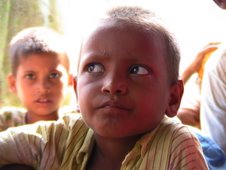
I am headed off to villages in Uttar Pradesh tomorrow. I will be away for a few days but there will be plenty of posts when I return. As I am immersing myself in my summer project, I will write about education in rural India. Here are a few photos to get you thinking on the topic.


(Class size? Desks? Resources?)


(Slightly more labor intensive than a water fountain)


(It is the middle of the morning and none of these guys are in school...)

Saturday, 28 July 2007

Would You Like Some?

When was the last time that you offered some of your food to the person sitting next to you on the airplane? Or invited a complete stranger in for tea or coffee?

Since coming to India, I have yet to sit next to someone on a bus, train or plane who has not offered me some of their food. While I did decline the strange cheese sandwich soaked in ketchup, I appreciated the gesture. At the office, the women I eat with share all their home-cooked food with each other and me. And in shops, villages and homes across India, I have sipped free chai, simply in exchange for conversation.

The greatest irony is that we super-size everything in America but we rarely share with strangers. In fact, I do not even know how I would respond to such food offerings if I were in the States. Just remembering all the Halloween horror stories of razor blades in apples makes me never want to accept “unwrapped” food! But what a loss that would be here.

Wednesday, 25 July 2007

Thanks for Leaving Me with 14 Kids


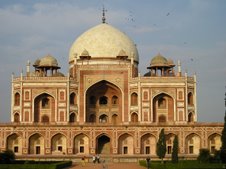
Forget about Clark Gable or Amitabh Bachchan (the most famoust Bollywood star). The original romantic was Shah Jahan, the Mughal ruler who built the Taj Mahal. He was madly in love with his second wife, Mumtaz. Not only beautiful, she was a busy woman. She bore him 14 children. Wow.

Tragically, however, she died while giving birth to number 15. Shah was so distraught that he constructed the Taj in her honor. It is the most gorgeous grave I have ever seen. Though a hulking piece of marble, it has an elegant, almost ethereal presence in person. The detail is also exquisite, from the tiny gemstone flowers inlaid in marble to the detailed calligraphy on the walls. And, with its perfect symmetry, the Taj is simply breathtaking. My photos fail to do it justice.


With a group of other Stanford students, I watched the sun set over the mighty Taj this weekend. But the best part was inside. You cannot wear shoes so you walk in on this soft, warmed marble. You enter this dark octagonal chamber where wisps of light lie gently on the two graves of Mumtaz and Shah. So perfectly serene, it feels holy.

Of course, then you remember that they had 14 kids. So their lives were never serene. They say that Shah’s hair went gray because of Mumtaz’s death. Or maybe he was just freaked out about raising all those kids!


(Shah Jahan, before his hair went gray. Unfortunately, Mumtaz's death was only the start of his troubles. His own son would later imprison him for life. Just your typical dysfunctional ruling family.)

Monday, 23 July 2007

Young at Heart

You are never too old to make a difference. This is what I learned from Mamaji and Dr. Hamilton.

These two men are wise in their years, but young at heart. While their peers have long since retired, they are still working actively to help rural villagers in India.

Mamaji (Hindi name for mother’s brother) is the uncle of Drishtee’s founder, Satyan Mishra. So he is Mamaji to everyone. He was our host for the week in Bihar. In addition to keeping me fed and sheltered, he entertained me with his stories. And his deep, full body laugh is infectious.


One day, Mamaji and I took a walk through his village. It was raining slightly so we strolled along under umbrellas. We talked about the challenges faced by villagers, especially the lack of opportunities for education and employment. We discussed the lasting impact of the caste system and gender inequalities. Even though he was raised in a very different culture, Mamaji never treated me differently.


(Local High School)

Mamaji has the ability to speak volumes with just a few words. When I asked for his opinions on government, he pointed to the gaping potholes in the roads, showed me a dilapidated building that was supposed to be a high school and asked, “Is this government working?”

Dr. Hamilton is Mamaji’s foil. He is the primary doctor on the Drishtee healthcare project. Though he has a home in Delhi, he has decamped to Bihar to get this project off the ground. He has spent his entire career in the rural health sector, helping villagers who did not have access to appropriate care.


(Dr. Hamilton at work with a patient, John in the background)

With Dr. Hamilton, I was most impressed with his resilience. I wondered how he could spend his entire life fighting such an uphill battle. Wouldn’t it have been easier to stay in Delhi and open a private practice? But he chooses to do this work because it is what inspires him and he can have an impact.

Together, Mamaji and Dr. Hamilton are a dynamic duo. They can talk, laugh or argue until the wee hours of the morning. I could barely keep up!

Thank you to Mamaji and Dr. Hamilton for reminding me that you can make the most out of every stage in your life.


Sunday, 22 July 2007

Mad for Mangos


This fellow was one of my favorite patients. He is an elderly individual seeking treatment for a variety of conditions, including diabetes (which is a growing problem in India). While he wants to take care of himself, he also admitted that he eats mangos every once a while. When the doctor reminded him that this was a no-no, he explained that he already knows the date he will die and he wants to enjoy the rest of his time. Which means eating mangos.

I see his point. Though I do not mean to trivialize his diabetes, the mangos here taste extraordinary. Not worth dying for, but pretty darn close.

Saturday, 21 July 2007

Mobile Healthcare

It is not a fast moving ambulance. But it gets the job done.

In Bihar, Drishtee is piloting a project to bring proper healthcare to villages through a for-profit model. Using the ambulance as the roving office, we set up camps in different villages every day of the week. Under a plastic canopy, the doctor sees patients, completes basic tests (e.g. blood pressure) and writes prescriptions. The villagers pay about a dollar for immediate care.

Although Drishtee costs more than free government health care, villagers are wiling to pay to avoid traveling far and losing a day of work. There are also quality concerns at the government facilities; villagers may also have to wait or may not actually see a doctor. In fact, many folks end up using the local chemist (pharmacy) as their primary care physician. This often results in inaccurate diagnoses and inappropriate prescriptions.


There are challenges to this model. First, we have to continue to educate the customers about the importance of health care and encourage them to be proactive. Often, people wait until their condition becomes so insufferable that they need extreme (and expensive) treatment.

Second, there are financial constraints. A patient may be able to afford the consultation but the prescription drugs are too expensive. We are trying to collaborate with local chemists but there are real trade-offs involved. Finally, there is an urgent need for health insurance. Ultimately, health is unpredictable and communities are better off if we can pool risk to protect individuals. But this requires convincing people who have very little money to spend it on an intangible product that does not feed or shelter them. Drishtee is also working on this but it is an uphill battle.

Thursday, 19 July 2007

Outsourcing, Village-Style

Most of the outsourcing in India takes place in and around cities. It is a huge industry, bringing in lots of revenue and aiding in the development of a class of higher-skilled workers. At the same time, it also increases the divide between wealthy urban and impoverished rural India.

But Drishtee is doing something about it. This week, I went on an unusual business trip to Bihar, the poorest state in India. After a grueling 26-hour overnight train ride and 2-hour bumpy car ride, we arrived at our Drishtee outpost in the middle of nowhere. Amidst mud roads and reed huts was a one-story concrete building with 20 intact computer workstations. Through a unique bio-generator and VSAT satellite technology, there is power and wireless Internet (most of the time!). Take a look.


The program is remarkable. Drishtee provides a vocational BPO school. Students in their late teens or early twenties enroll in a three-year program. They receive intensive computer training at the outset and then learn by working. While working, they are also paid for their efforts.

At the moment, the group was working on data-editing. A company in Australia had scanned millions of books onto CDs. They sent the CDs to Drishtee to be checked for minor formatting errors. The BPO staff will go through every page of every book, make changes as necessary and send the CDs back to Australia. They will be paid based on completion and accuracy.

This model is amazing because it creates real economic opportunity in the heart of the rural village. There are limitations – the start-up costs are high (so tuition is higher than most can afford), it is difficult to get resources around here and there are no experienced managers available locally – but it is a great start.

I do not intend to start a debate on outsourcing on this blog. I will say, however, that this outsourcing project has the potential to truly change lives in this village. Young people can work, develop skills and bring in outside capital – all of which is likely to raise the standards of living for the community.


Here is a picture of Pankaj, one of my co-workers who is overseeing the project. Recognizing the limited experience of the BPO students, he came in from Delhi to ensure that they are properly trained and prepared to do the work. While aware of the operational challenges, he also recognizes that these students are absolutely committed to doing the best job they can do. Pretty inspirational stuff.